
Learnings from the Health.Tech Global Summit 2026
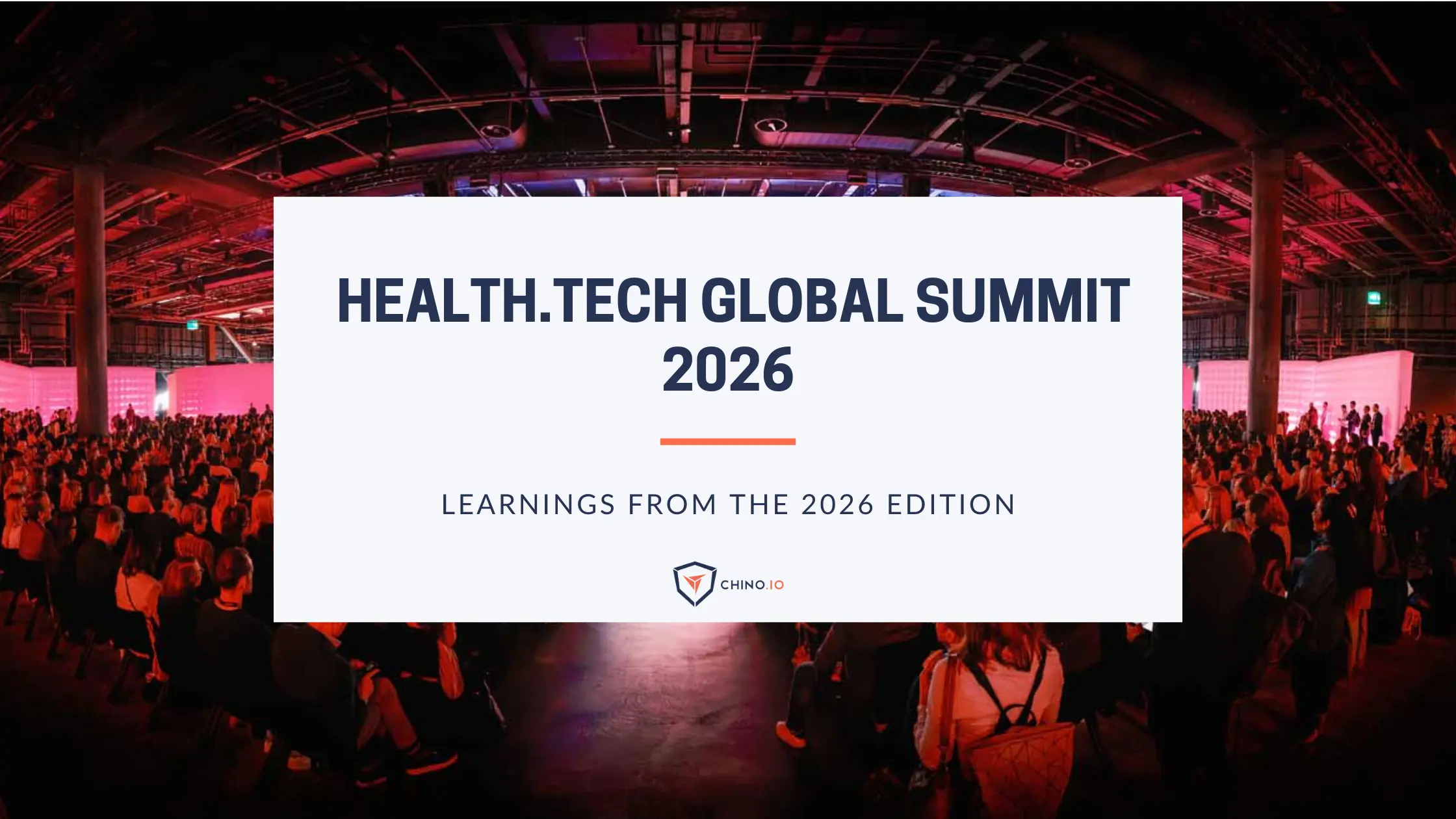
This year’s health.tech Global Summit took place in Basel from 3-5 March. It was (as always) an excellent event with some top speakers. The team at health.tech definitely did a great job putting together the program. But of course, I don’t go to these events just to listen to the talks. To me, they are an opportunity to take the pulse of the digital health industry. Listen to what other experts think the market is doing, and identify the pain points everyone is facing.
Funding is challenging
As we all know, funding in tech has been tight recently. So, it’s rather unfortunate that the EU’s approach to regulation, coupled with a fractured market, makes VCs even more wary about investing. Most VCs measure success in two ways:
- Market share/growth. Ideally, they want to see a hockey stick trajectory, or at least a YoY growth trajectory.
- Impact. Many VCs are keen to back technologies that are disruptive. In health tech, that means ones that can have a tangible impact on health outcomes.
Many people I spoke with were quick to identify a problem in the EU. Firstly, entering the EU market is a pain. Each country has different rules or different interpretations of (supposedly) bloc-wide standards and regulations. That makes it much harder to achieve rapid growth because each market entry requires significant effort. Secondly, it can be hard to make an impact for several reasons:
- Difficulty entering the market means you can’t make an impact to start with
- Lack of data and complexity of running trials makes it hard to prove any impact
- Conservative healthcare professionals are hard to convince, so even if your product is on the market, it doesn’t get prescribed
All this brings us to the next point: which market should you target?
Which target market is best?
One thing really stood out when I was talking to companies launching new products: Most of them were focusing on the US! When I asked them why, there were a few standout answers:
- It’s a huge market and significantly more lucrative than most EU markets. And, since market entry is relatively easy, you can rapidly go from launch to monetisation.
- The regulatory landscape is far less fractured than here in Europe. That means you have to overcome one set of regulatory hurdles, not 10+!
- There is a perception that FDA approval is easier than getting MDR (though it’s not clear that’s really the case). There’s also a certain amount of confirmation bias happening here: VCs see companies grow rapidly in the US, and so that’s where they invest most heavily. As a result, US-focused companies are outperforming their European counterparts
- Data is readily available. Under HIPAA, health data can be de-identified and then shared without any further effort. As a result, a whole health data industry has built up, making it incredibly easy to get almost any data you need. That is in stark contrast with the EU where getting even a small amount of data can sometimes seem impossible!
It’s worth noting at this point that the UK is also quite attractive from a data availability viewpoint. But it has a regulatory model that is still quite aligned with the EU.
AI and Digital Twins
The other thing that surprised me during the event is how AI is now being pitched in the health space. It has gone from marketing buzzword to a mainstream tool that people are leveraging to deliver real value and improved health outcomes. Much of this is still being driven by “traditional” machine learning approaches. But there are more and more examples of companies using LLMs and generative AI in healthcare. Of course, this is why it’s so important to solve the issue of (safe) access to health data in the EU.
Hand in hand with this, we are finally seeing digital twins coming into their own. The digital twin concept is far from new, however, it has been hamstrung by the complexity and scale of the models. That meant until recently you could only run a digital twin on extremely high powered server clusters. Or you had to accept some significant compromises in performance and granularity. But now, the growth in computing power brought about by the needs of AI means we see digital twins able to run effectively on a MacBook Pro!
Final thoughts
So what were my conclusions after the event? Let me summarise them:
- The EU's approach to regulations is a turn-off to investors. This is made even worse with the growing number of country-specific regulations we now see.
- The US (and to a lesser extent, the UK) is a far more attractive market for health startups. That’s especially true if your roadmap relies on access to health data.
- AI is now a reality in the health space. But it has to be applied in a different way to many other verticals. One of the most striking ways is through digital twins, which are finally coming of age.
What comes next? What has to happen to bring the EU market up to speed? Some people would say all we need is deregulation (like the proposed Digital Omnibus Act). But I would argue you cannot regulate your way out of a regulatory mess! Instead, the EU needs to stop allowing countries to create their own unique interpretations of the laws that already exist. If there’s an EU regulation, businesses should feel confident that as soon as they are compliant in one country, they are compliant everywhere. But sadly, I fear we are actually heading in the opposite direction.
.webp)
- Early tangible impact on either outcome and/or health economics are key for VCs, but this can be hindered by regulatory challenges and EU fragmented market.
- The US market more attractive than the EU one, for several reasons, starting from size, less fragmentation on business and regulatory, FDA vs MDR perception, and possibility to access to data easily.
The most important things that are driving investors’ interest are:
- AI is everywhere - but we are talking more about healthcare and value propositions, rather than the pure AI buzzword.
- Digital Twins are a hot topic. Startups are finding ways to technically get the data from Silos, and fighting data related challenges.
Need help figuring it out? We’re here to help!
Chino.io is the one-stop shop for solving all privacy and security compliance aspects.
As a partner of our clients, we combine regulatory and technical expertise with a modular IT platform that allows digital applications to eliminate compliance risks and save costs and time.
Chino.io makes compliant-by-design innovation happen faster, combining legal know-how and data security technology for innovators.
To learn more, book a call with our experts.
Streamline Your Compliance With Chino.io Today
Discover our
Templates
Read our Latest Industry Insights
Discover insights from our expert writers.
.webp)