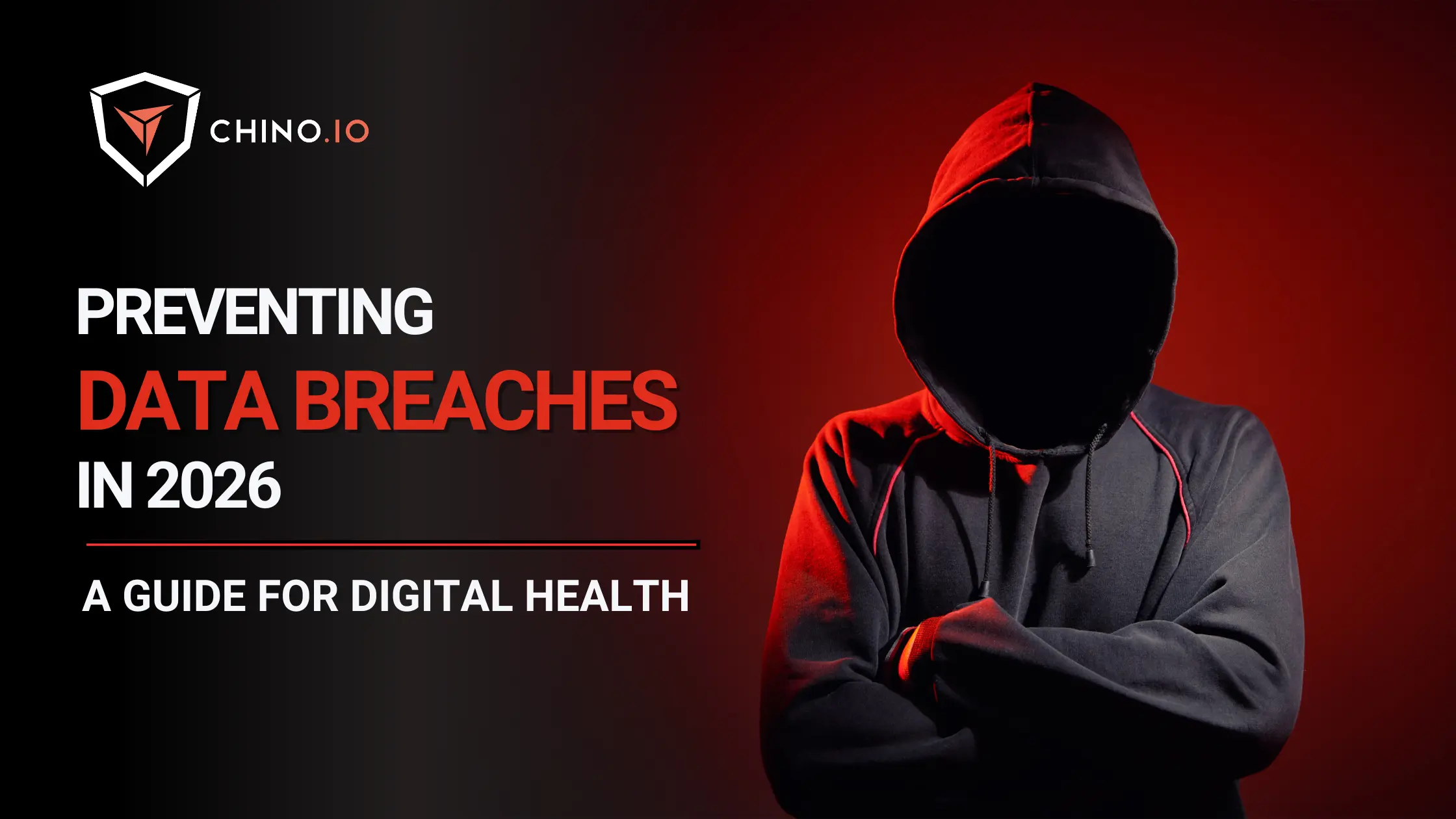

Imagine this: One small cloud misconfiguration, and suddenly thousands of patient records are exposed. The result? Regulatory fines, media scrutiny, and a serious dent in customer trust.
For leaders in digital health, MedTech, and SaaS, this isn’t just a hypothetical nightmare, it happens with alarming regularity. In 2024 alone, 60% of digital health firms faced at least one data breach, and the average cost of a breach climbed to $4.5 million. Attackers are faster, smarter, and more automated than ever before.
But here’s the good news: most breaches are preventable.
In this article, we’ll go through:
- The real causes of data breaches
- The impact on your business
- Proven, tips and strategies to protect your business
- Real-world lessons and next steps your team can take today
Whether you manage sensitive health information, financial data, or user credentials, this is your blueprint for resilience.
The top causes of breaches
Several key shifts make data breaches more dangerous in 2026:
- Cloud adoption is nearly universal, increasing complexity and exposure.
- Remote work has added more endpoints and external risks.
- Attackers now use AI, automating phishing and vulnerability scans.
And while tech has evolved, many companies still rely on outdated security models. The reality? Yesterday’s defences don’t block today’s threats. So, what are the main data breach threats in 2026?
1. Human error
Human mistakes continue to be the top driver of data breaches—often in ways that are frustratingly easy to predict. Key scenarios include:
- Misdirected emails: an employee sends a sensitive email to the wrong recipient
- Lost devices: a clinician misplaces an unencrypted laptop
- Sensitive files shared by mistake: a project manager accidentally sets “read all” permissions on a folder of personal health information (PHI)
2. Weak passwords & Authentication
Weak, reused, or poorly managed passwords are an open invitation for hackers. In 2025, 65% of organisations reporting a breach cite credential compromise as the entry point. Lack of strong password policies, no MFA, and poor review policies can turn a single mistake into a systemic issue. Like when one breached admin account unlocks your entire infrastructure.
- Phishing & social engineering
- Attackers tailor emails and messages to mimic colleagues, vendors, or regulators, pushing you to click a malicious link or wire money to criminals. The widespread availability of LLMs capable of writing compelling and believable emails is making this ever easier. Phishing remains the number one external threat for healthcare and SaaS companies, accounting for 36% of breaches.
- System misconfigurations
Developers and sysadmins often trigger data breaches through carelessness, forgetfulness, or lack of experience with configuring complex services. 40% of breaches are linked with some form of cloud setup error. This includes things like incorrect access settings, unpatched systems, legacy endpoints, and visible code comments.
3. Insider threats
Sadly, you can never escape the threat of malicious actions by staff or vendors. This is especially high risk when you have to discipline or terminate an employee. As many as 25% of healthcare breaches involve an insider. Some of these are accidental, some are the result of blackmail, but some are malicious.
What data is targeted and what is the damage?
A data breach today means much more than technical downtime. It’s a legal, financial, and reputational crisis.
Cybercriminals are motivated by 3 things:
- Financial gain. For instance, from ransomware attacks, selling stolen data, or using stolen data to commit identity fraud.
- Causing disruption to services. For instance, trying to disrupt infrastructure and cause confusion and chaos.
- Trying to erode trust in institutions. For instance, targeting the financial or healthcare systems to cause panic.
As a result, the most targeted data includes:
- Personal Health Information (PHI): Patient records, diagnoses, genetic data
- Financial Information: Billing records, insurance details
- User Credentials: Logins, passwords, tokens
What are the consequences?
Cyber attacks of all forms carry huge risk for the companies involved. The damage can run into millions and the reputational hit can last for years. Potentially you could face:
- GDPR fines up to €20 million or 4% of global revenue
- HIPAA penalties for healthcare-related data mishandling
- Customer churn, media fallout, and regulatory investigations
Trust takes years to build but just minutes to lose. Especially in healthcare, one breach can undo everything.
How to prevent data breaches
The best approach to cybersecurity in 2026? A strong, multi-layered defense that includes people, processes, and technology.
1. Harden access and authentication
Passwords remain the skeleton key behind most attacks. To stay ahead:
- Mandate unique, strong passwords company-wide (think 12+ characters, no repeats)
- Deploy multi-factor authentication (MFA) on all sensitive and remote-access accounts
- Roll out password managers to automate secure storage and updates
- Look into adopting passkeys, as they provide a much more secure and reliable authentication method
Regularly audit who has access to what, and don’t let permissions linger after role changes. Stick to the least privilege principle and align practices with compliance frameworks like GDPR and HIPAA.
Picture this: One overprivileged account, with a weak password, can open the floodgates to your entire database.
2. Keep on top of security patches and zero day attacks
Don’t let outdated software or overlooked settings open the door. Before onboarding new vendors, require security checklists and regular reviews to avoid inheriting their risk. Monitor for security updates and patch as soon as you can. As soon as an exploit is known, it will start to be targeted by hackers. Here’s the most important tips:
- Automate patch management
- Monitor cloud configurations for missteps
- Use endpoint protection and firewalls that update frequently
3. Encrypt and minimise data
Encryption isn’t just a tech buzzword: Regulations like GDPR and CCPA demand it. Even if attackers get in, encryption renders your data useless.
Here’s what effective data protection looks like:
- Encrypt all sensitive data at rest and in transit
- Anonymise or pseudonymise data where possible
- Only collect data that’s strictly necessary (GDPR and HIPAA both require data minimisation)
4. Training should be continuous and compulsory
The fastest way a data breach can slip through your defences? Mistakes made by your employees (including management). Almost 90% of breaches start with a human error. That means your #1 defense is practical, ongoing security awareness training.
- Run regular phishing simulations
- Offer short, engaging micro-trainings
- Build a “security-first” culture across all departments
- Encourage people into the mindset that they’re critical to security
5. Be ready to respond
Real-time visibility is your early warning system. Remember: even the best defences can be breached, so you need to plan for the worst. Prepare by:
- Creating a documented incident response plan
- Running regular breach simulations
- Assigning clear roles for every response stage
Companies with tested response plans save up to 40% in breach costs.
Don’t forget compliance obligations: GDPR, HIPAA & More
Data protection regulations are tougher than ever.
Key obligations in 2026:
- Notify authorities within 72 hours of a breach (GDPR)
- Implement encryption and access controls (HIPAA)
- Demonstrate continuous risk assessment and audit readiness
Tip: Align your security practices directly with legal frameworks. It’s not just safer, it’s smarter business. Real-world example**:** A SaaS company avoided GDPR fines after a breach thanks to documented MFA use and regular training logs.
Real world lessons and next steps
A quick read through some of the recent GDPR data breaches shows the importance of being prepared, documenting everything, and reacting fast when problems occur. So, here are you next steps to make sure you aren’t making headlines for all the wrong reasons:
Step 1: Assess your risks
Use a compliance platform or suitable template to conduct a detailed security risk assessment. Remember to keep a paper trail of all your actions.
- Where does your most sensitive data live?
- Who has access, and how are they authenticated?
- What steps are you taking to reduce the risks?
Step 2: Prioritise action
Identify the quick wins and longer term steps you need to take. Write a detailed action plan and revisit and review this regularly.
- Quick wins: Turn on MFA, update patches, train staff
- Long-term: Build culture, automate compliance, review vendors
Step 3: Get Help from the experts
Partner with domain experts like Chino.io for:
- Compliance guidance for GDPR, HIPAA, and emerging rules
- Tailored security stack reviews for digital health environments
- Actionable tools and checklists
The key security lessons for 2026:
Understanding and preventing data breaches in 2026 is mission-critical for digital health, SaaS, and MedTech leaders. With threats evolving rapidly, organizations must combine clear processes, strong culture, and robust technology to safeguard sensitive data and maintain regulatory trust.
- Human error drives most breaches: over 80% in digital health and SaaS stem from mistakes like misdirected emails or misconfigured cloud settings, highlighting the urgency of ongoing security awareness training.
- Weak authentication and poor password hygiene invite attackers in, with 65% of breaches linked to credential compromise. So, enforce multi-factor authentication (MFA) and unique passwords across your systems.
- Sophisticated phishing and social engineering remain the #1 external threat, accounting for 36%+ of breaches. Use realistic simulations and frequent workshops to strengthen your team’s instincts.
- Cloud misconfigurations and unpatched systems are silent risks, contributing to 40% of large leaks. Automate patch management and schedule regular audits of cloud assets to close gaps quickly.
- Insider threats cause 25% of healthcare exposures; limit access by the least privilege principle and conduct periodic access reviews for all staff and third-party vendors.
- Proactive, layered prevention slashes breach impact: Combine employee education, strong authentication, encryption, and real-time monitoring to reduce incidents and keep customer trust.
- Compliance is your blueprint and safety net: use regulator-approved checklists to embed legal requirements (like GDPR/HIPAA training, logging, and breach response) into daily operations, not just audits.
- Start with a three-step action plan: Assess your data, prioritize high-impact fixes (like MFA and patching), and commit to incremental security improvements because prevention is an ongoing process.
Need help figuring it out? We’re here to help!
Chino.io is the leading European data protection consulting firm specializing in GDPR compliance for health-tech and high-security industries.
As a partner of our clients, we combine regulatory and technical expertise with a modular IT platform that allows digital applications to eliminate compliance risks and save costs and time. To learn more, book a call with our experts.
Streamline Your Compliance With Chino.io Today
Discover our
Templates
Read our Latest Industry Insights
Discover insights from our expert writers.